
Anti-glare film, OC
Glare Reduction Window Film in Orange County
Glare in an Orange County house rarely comes from the sun alone. Light thrown back off the Pacific, a pool, pale stucco or the windshields in a driveway can wash out a TV or laptop for most of the afternoon.
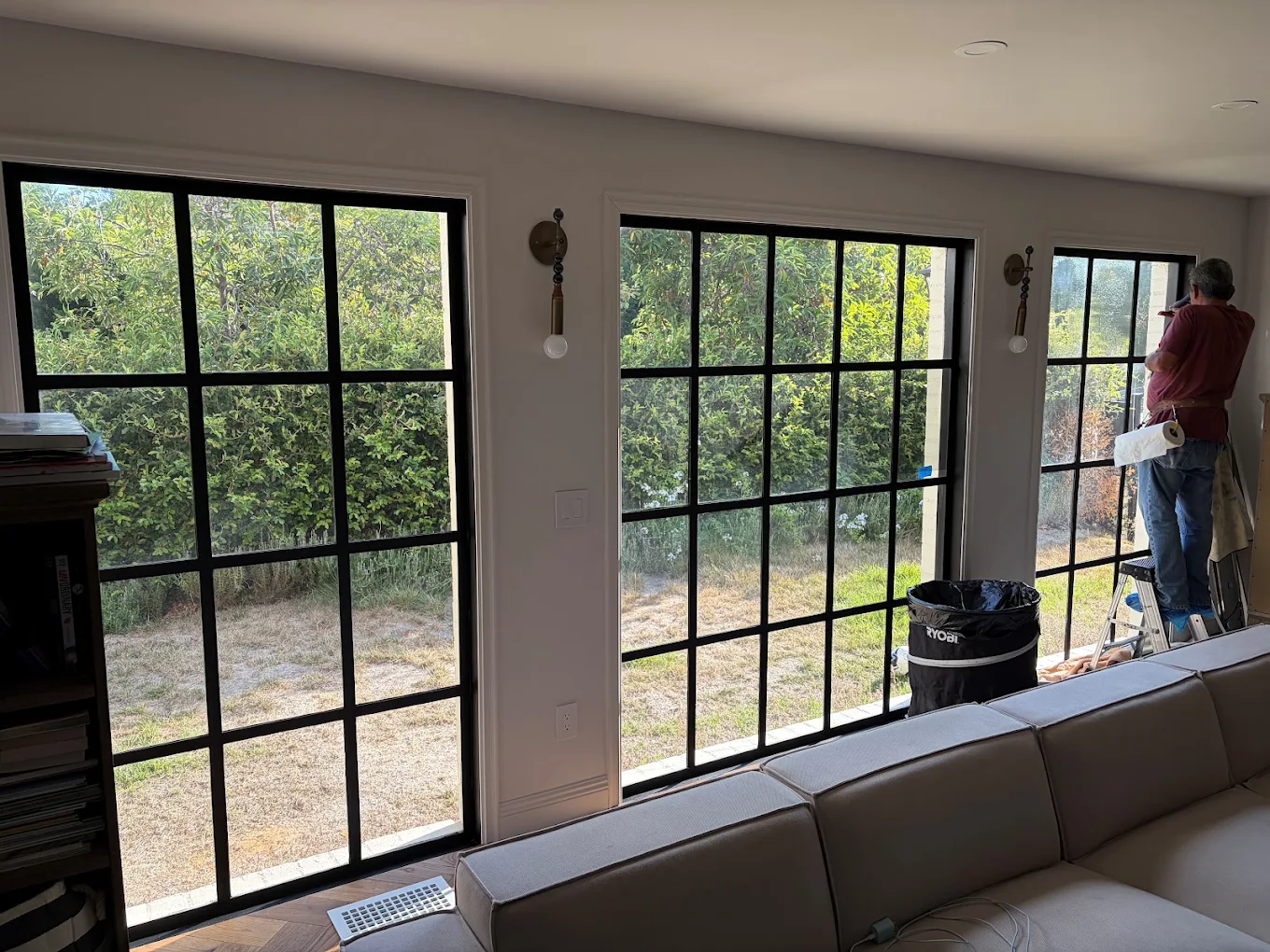 Orange County
Sources of Window Glare in Orange County Homes
On the coast, the water is the problem. From midafternoon on, the sun drops toward the horizon and its reflection runs across the ocean or the harbor and straight into west-facing living rooms in Newport Beach, Laguna Beach, Dana Point and Huntington Beach. The brightness can be harder on the eyes than direct sun, because it comes in at eye level and below the edge of any awning.
Inland, the culprits are hard, light surfaces. Concrete patios, travertine pool decks, white and cream stucco, and the glass of the house next door all reflect sunlight sideways into rooms. Hillside homes in Anaheim Hills and Laguna Niguel add another source: the glint from rooftops, solar panels and windows spread across the slopes below them.
How Glare Reduction Window Film Changes the Light in a Room
The problem is contrast. When a pane is many times brighter than the walls next to it, eyes set themselves for the pane, and a laptop or TV in front of it looks faded. A glare product trims how much daylight passes the pane, so the window and the room sit closer together in brightness.
How much reduction you need depends on the source. A light neutral film takes the edge off ordinary daylight and keeps a room bright. Reflections off water or white walls usually need a medium film. The darkest films are reserved for media rooms or west walls with no shade at all. Samples taped to the glass at the worst hour of the day show the difference better than any spec sheet.
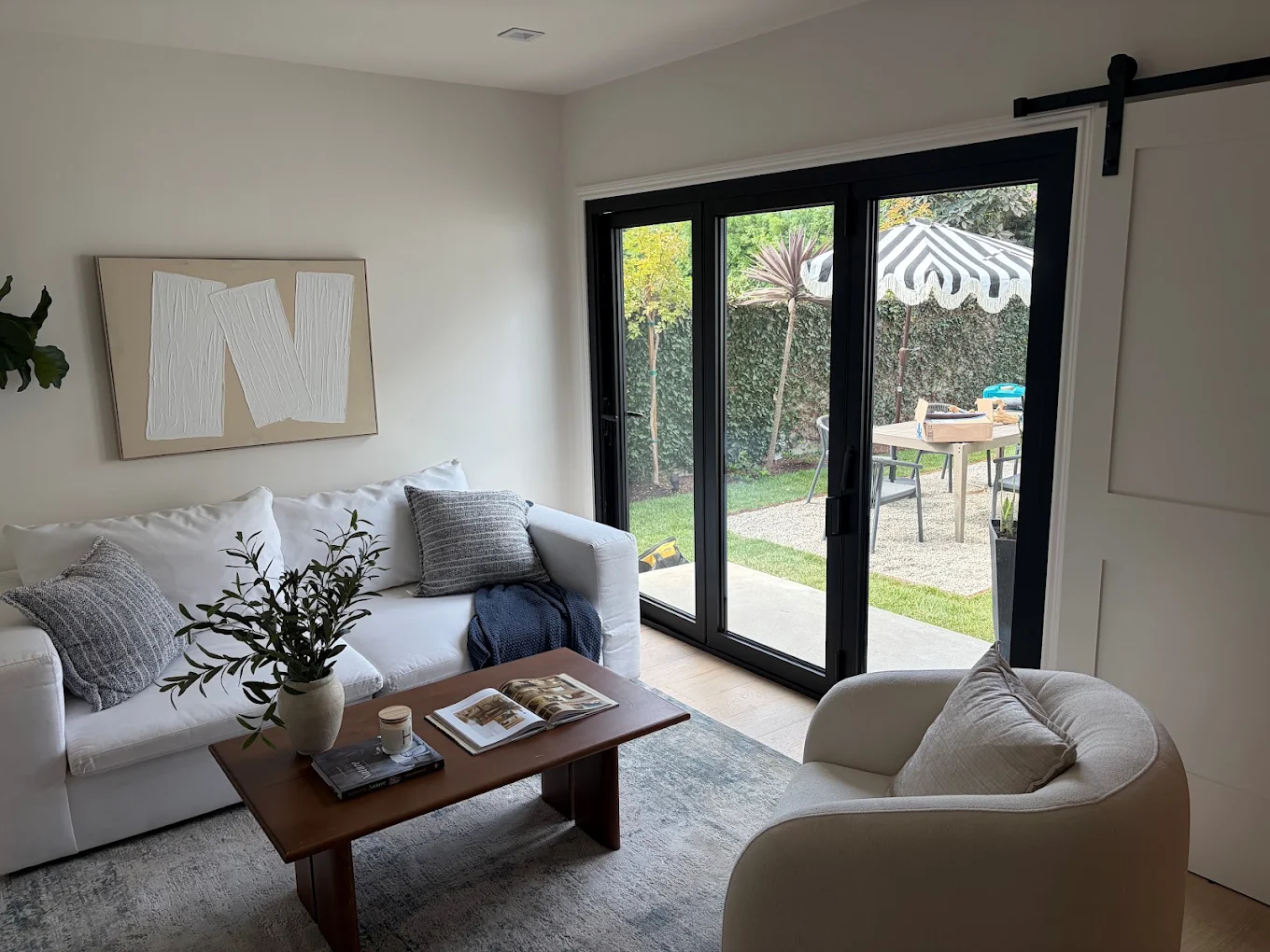
Glare Film for Home Offices, Media Rooms and Kitchens
A lot of Orange County home offices ended up in whatever room was free, which often means a spare bedroom on the west side or the end of a kitchen counter facing a slider. Glare film lets that person keep the blinds open, see the yard and still read a spreadsheet at four o'clock.
Family rooms with large TVs are the other classic case. Builders tend to put the big slider and the TV wall on adjacent or opposite sides, so the screen catches the light for half the day. A moderate film on the slider and side windows makes daytime viewing possible without blackout curtains. Kitchens with built-in screens, glossy stone counters and cooktops near a window also benefit.
- West-facing home offices and study nooks
- Family rooms where the TV faces a slider
- Kitchens with glossy counters near the glass
- Rooms that look out over pools or water
Keeping Ocean and Canyon Views With Glare Window Film
For many coastal and hillside owners, the view is the reason they bought the house. Any film has to cut the glare without making the ocean look like a gray wash or the canyon look like dusk. Neutral films with a moderate reduction in visible light usually strike that balance best, because they keep colors true.
Reflective films control glare strongly but come with two trade-offs: a slightly mirrored look from outside, and an indoor reflection after dark when the lights are on. Some owners accept that on the most exposed wall and use a lighter neutral film elsewhere. We help you test both and pick by room.
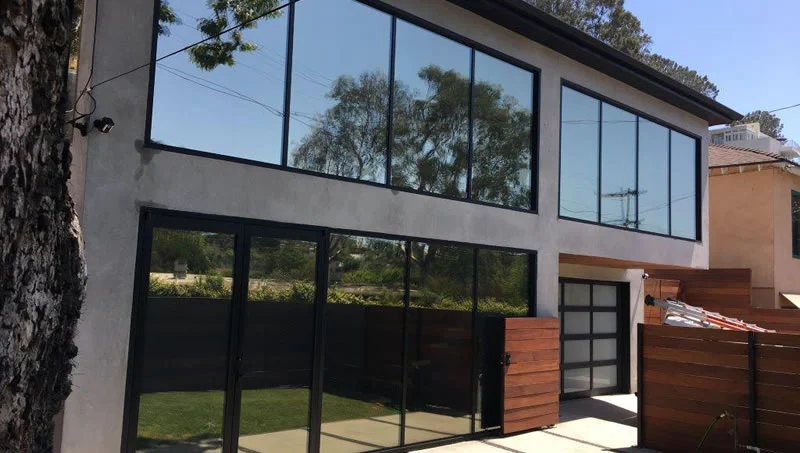
Glare Film Results Inside Orange County Houses
Readable TVs and Laptops With Glare Window Film
With less brightness coming through the window, TVs, monitors and tablets hold their contrast in the afternoon. You can leave the blinds open and still work, read or watch without moving the furniture.
Glare Reduction That Keeps the Ocean View
Neutral glare films tone down the sparkle off the water without turning the view gray. Coastal homes keep the reason they have big windows while the room becomes comfortable to sit in.
Glare Window Film Eases Eye Strain
More even light across the room means less squinting and fewer headaches during long work sessions or reading by the window. Kids doing homework at the kitchen table notice it too.
Glare Film With Added Heat and UV Control
Most glare films also block nearly all ultraviolet light and some solar heat, so the same product slows fading and takes a little warmth out of sunny Orange County afternoons.
Anti-Glare Window Film Questions in Orange County
Does anti-glare film leave a living room gloomy?
Not with a light or medium film. Those cut the harsh brightness while the room still feels well lit. Darker films are an option for media rooms, and we show the difference on your glass.
Does glare film help with reflections off the ocean?
Yes. Neutral and lightly reflective films both reduce the reflected light coming off water. The right choice depends on how much you want to preserve true color in the view.
Can glare film go on dual-pane windows?
Yes. Insulated units, coated or not, take glare film well when the product is on the approved list for that glass, which we confirm first.
How does glare film differ from heat control film?
They overlap. Glare film mainly reduces visible light, while heat film targets infrared. Many products do some of both, so we pick based on which problem is bigger in that room.
Will I see my reflection in the window at night?
With reflective films, yes, when the room is lit and it is dark outside. Neutral films produce much less of that effect.
Glare Reduction Window Film Service Areas in Orange County
Window film quote
Request Glare Film Pricing in Orange County
Tell us which rooms have glare and at what time it peaks, then attach window sizes and a photo taken from where you sit. We will recommend a film level and price it.
Prefer email? info@windowfilmorangecounty.pro